Granada
Travel extraordinaire and writer Rick Steves wrote of Spain: “A mix of old and new, modern and traditional.” My wife and I couldn’t agree more especially as we experienced the magic of Granada.
Our cab climbed the steep road up to the entrance of the Parador de Granada where we were to spend the night on the grounds of the Alhambra with the snow covered Sierra Nevada behind us. I don’t know if I’ve ever seen anything so awe inspiring as the Alhambra. It is magnificent and beautifully laid out, with peaceful courtyards filled with tinkling water features. Soft edged areas for contemplation filled with plants. Rigidly structured rooms made exact with mathematical precision and wooden mosaic ceilings perfectly laid out. Even the stylized stalactites showcased both the imagination and skill required to bring the palace to life.
TIP: You have to book tickets in advance. My wife and I arrived thinking our one night stay in the parador would somehow grant us reserved tickets to purchase. It did not. I had to really work the sympathy card with the front desk man who eventually buckled under my relentless pressure. He slotted us in a tour group that was just starting, and I thanked him profusely.
The Alhambra is a World Heritage Site and, although the term “palace” is widely used, it really is a large complex perched atop a hill in Granada and was the last and greatest Moorish palace.
A guided tour is strongly recommended if you visit the Alhambra, and will enhance your knowledge and appreciation for this dazzling work of art. The Nasrid Palaces lie in the center of the Alhambra with the Patio de los Leones (Patio of the Lions) being one of the standout areas. A fountain seemingly held up on the backs of twelve lions sits in the center of the palace with columned archways, heavy with stalactites, surrounding the patio.
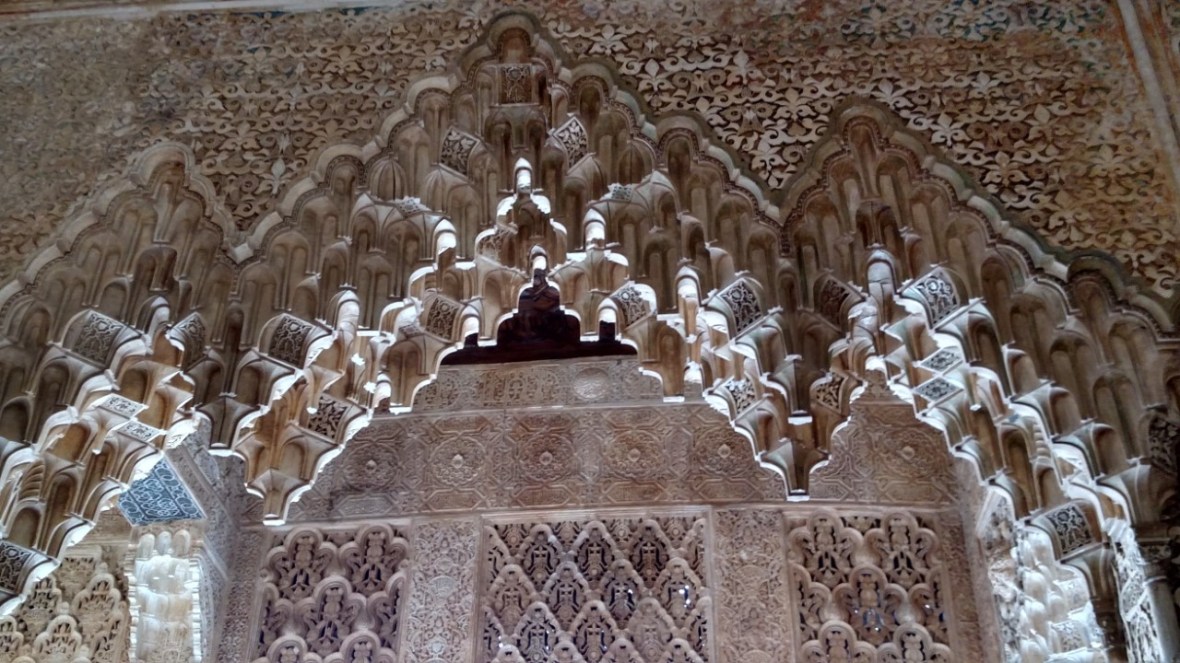
Stalactites
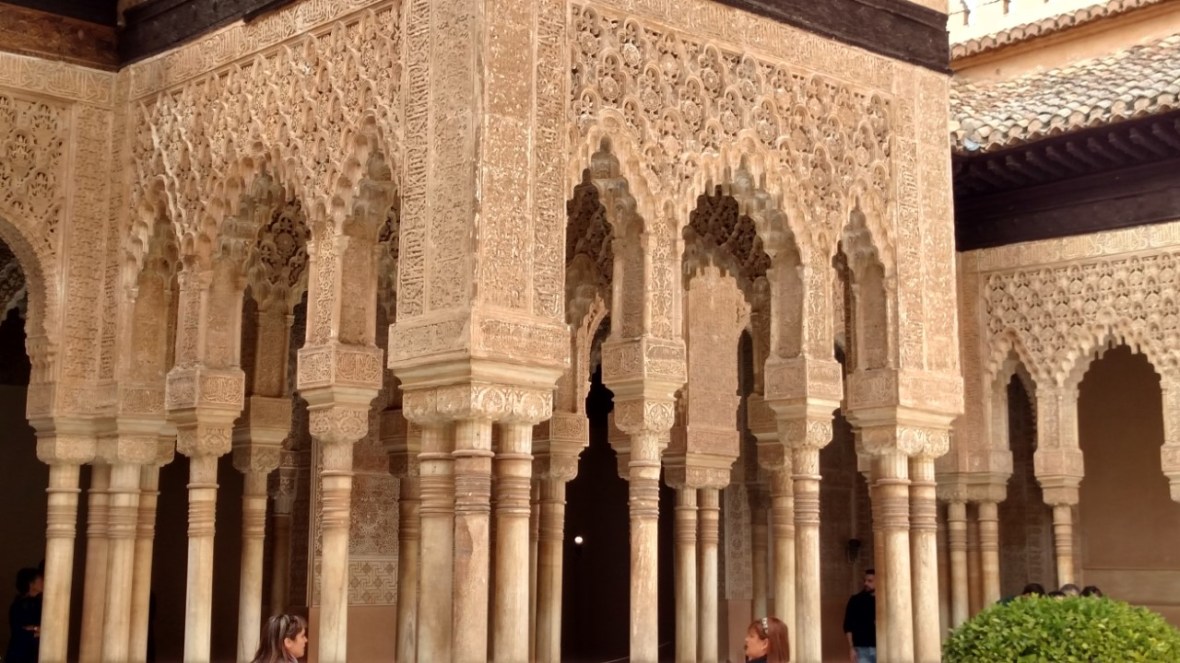
Columns surrounding the Patios de los Leones
The tour takes hours, eventually moving through the austere stone structures towards the gardens of the Palacio Generalife. Verdant vibrancy and playful water features fill the former summer palace of the sultans.
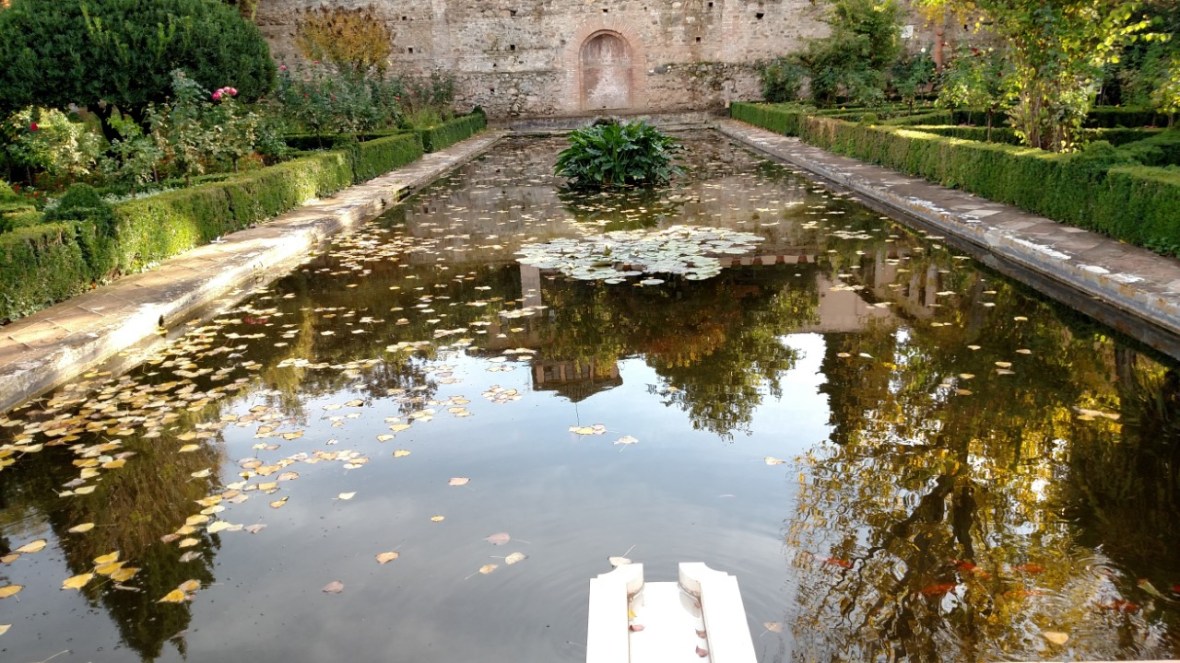
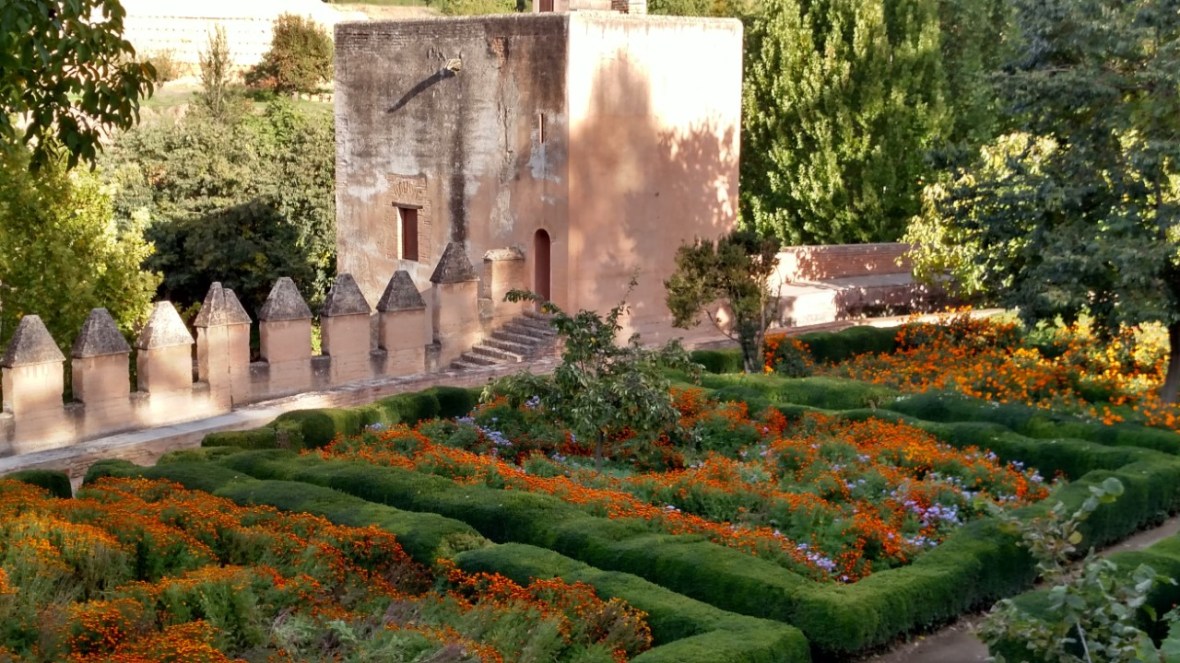
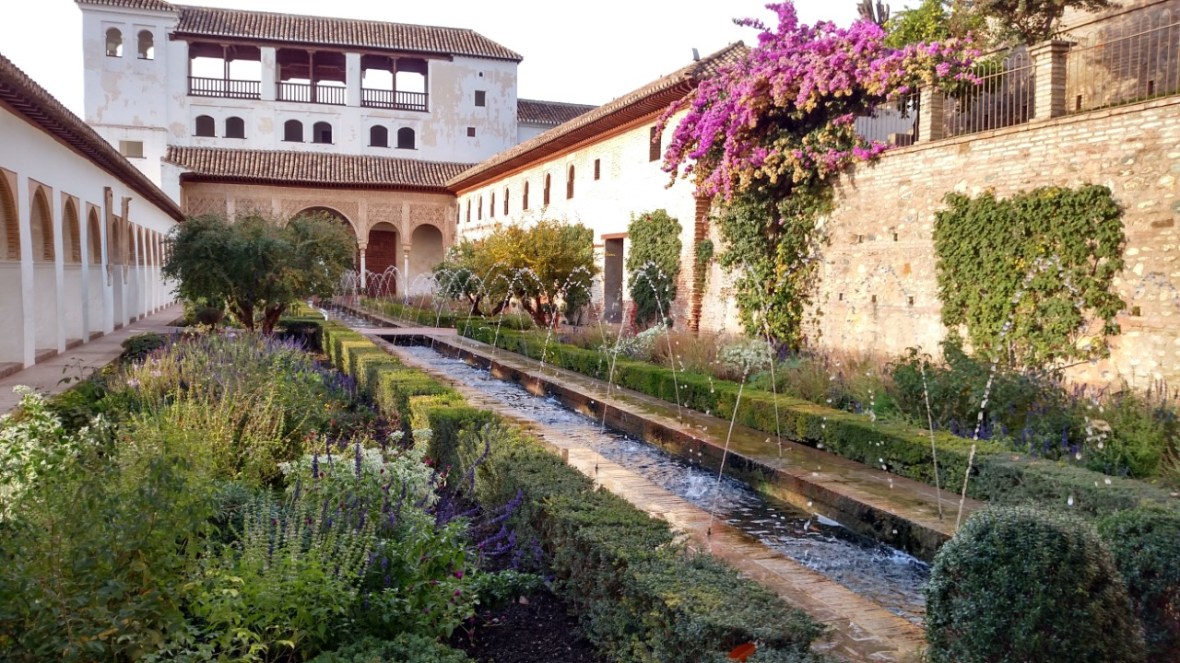
The court of la Acequia
After our tour, we were famished and needed to eat, but unfortunately the restaurant, La Mimbre, right outside the ground was closing to prep for dinner. Luckily, the staff was nice enough to bring a plate of jamón, manchego cheese and crackers, along with two beers. We thanked our waiter, a dapper young man, who was very understanding of our plight.
Once refueled and recovered, we walked down the steep slope to the stream-filled lower section filled with shops and markets (where you can see the North African influence in action) and then up the labyrinthian streets to the top of the opposite slope to the Albaicín quarter.
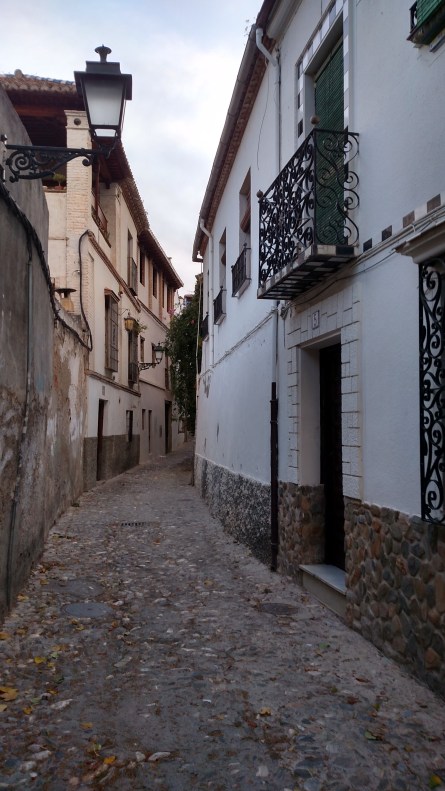
Albaicin Quarter
Granada is an intriguing city with stone streets between whitewashed buildings, dark wrought iron accents, and tiled roofs. It is an intoxicating place and our only regret was not staying another day. The Albaicín has Moroccan-style shops and walls hiding little gardens. But at the top of the hill is Mirador de San Nicolás where everyone goes to see the “bucket list” view of the Alhambra. Please take the time to get explore this oldest part of Granada.
We retired to our room at the Parador, went to sleep, and woke for breakfast as we had an early departure for Barcelona.
The lobby entrance to the Parador de Granada is itself a wonderful threshold to cross over from the front courtyard. Walking past the cramped lobby, you enter a courtyard with rooms forming the perimeter. We had a nice room with windows that swung open to reveal the leafy exterior courtyard below.
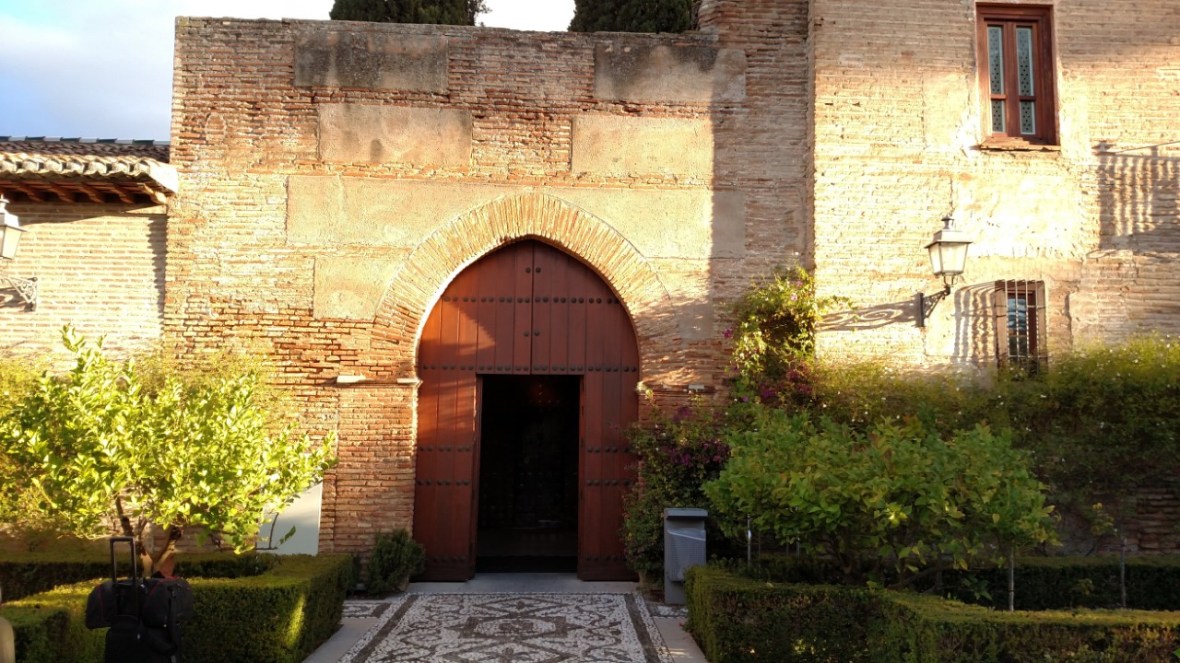
Entrance to the Parador de Granada
Barcelona
The uneventful short flight into Barcelona gave us no indication of the heavy downpour that would interrupt our shopping later that afternoon. But before all that could happen, we had to check into our hotel. During the cab ride, we were immediately struct by how different Barcelona was to Madrid. Barcelona is softer, more relaxed, and felt like a Catalan version of Paris with it’s leafy streets oozing with charm and vibrant architecture that ranges from the elegant to the impossible thanks to Gaudí.
We arrived at the artsy Hotel Ohla, which was our home for the next 4 nights, and went up one level to check in. As a rule, when someone greets us with a glass of Cava, as we were greeted at the Hotel Ohla, we accept it. Sitting in the tiny check-in area enjoying the Cava, my mind wandered while the concierge went through the hotel amenities and room description, and I started thinking about the food, the art and the shopping.
Our room, a minimalist styled junior suite was fantastic. A large room of sharp angles, dark colors and a sleek bath area offered plenty of room to stretch out and relax after long days of sightseeing…and shopping.
We headed up the street towards the Eixample area and Paseo de Gracia which is one of the main shopping streets. Eyeing the Basque emblem in front of Txapela, we walked in looking for pintxos (pinchos). With a picture menu on the placemat (like a sushi menu) and heavy tourist vibe, the food is basic but good. We had everything from gambas to calamari to chistora (sausage) all on toasted bread. From time to time a waiter would walk by with a tray of something special as in one instance when it was duck. It was all good and very reasonably priced. We lingered to slowly eat, drink beer and wait for the torrential downpour to pass.


When the rain subsided, we went over to the Adolpho Dominguez store to window shop for leather goods. After about 30 minutes of browsing, my wife walked out with a new burgundy handbag and I had a bag with a new pair of shoes and a shirt. The Euro exchange rate was fantastic while we were there and the prices were too good to pass up. The humidity picked up and I took off my coat and scarf, stuffing them in one of the shopping bags and we continued back to the hotel. About half way there, the weight was too much and the bottom of my bag (now slightly wet) ripped spilling everything onto the pavement. If any readers of this blog recall seeing a tourist picking up a pile of clothes on Paseo de Gracia, that would have been me.
We returned to our room for a nap and freshen up, and later went walking without any specific destination in mind. Barcelona is such a vibrant city, very tourist friendly and buzzes long into the evening. A late dinner was had at Tosca, a lively restaurant near our hotel. When we arrived it was packed, but we were able to sit at their bar and order food. Drinks were glasses of Rioja, and Chris and I split a grilled salmon with patatas braves both of which were delicious.
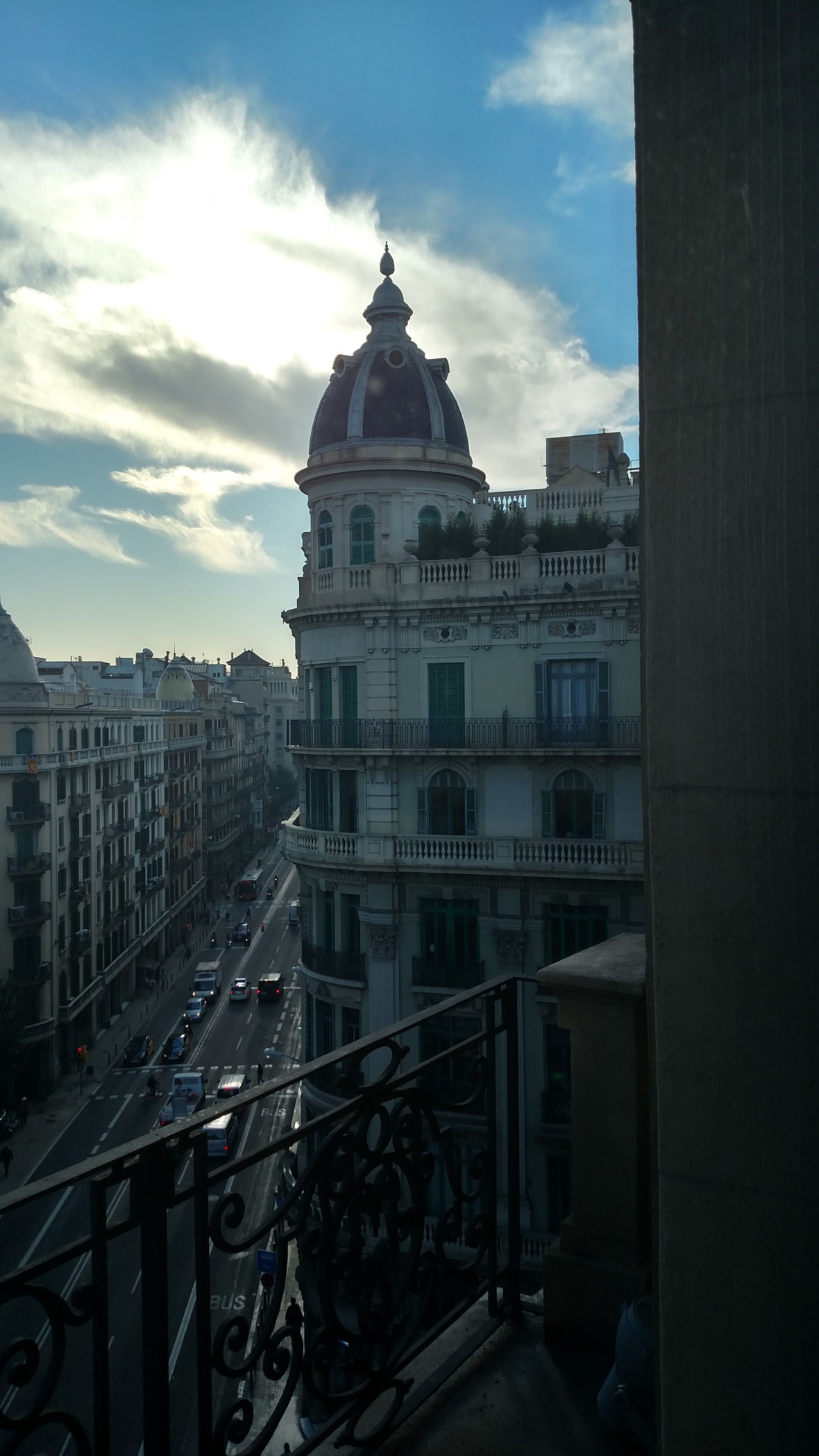
View From Our Room at Hotel Ohla
Usually, we eschew a hotel breakfast for something at a local cafe, but in this case we had breakfast each morning at the hotel. Everything was good, and while eating we had a chance to relax and organize the day’s agenda.
After a brief stop at the Antic Teatre to admire it’s exterior, we headed to the Barri Gòtic – a maze-like neighborhood of tiny walkways, alleys, and streets with walls and balconies adorned with handsome hanging planters and pots.
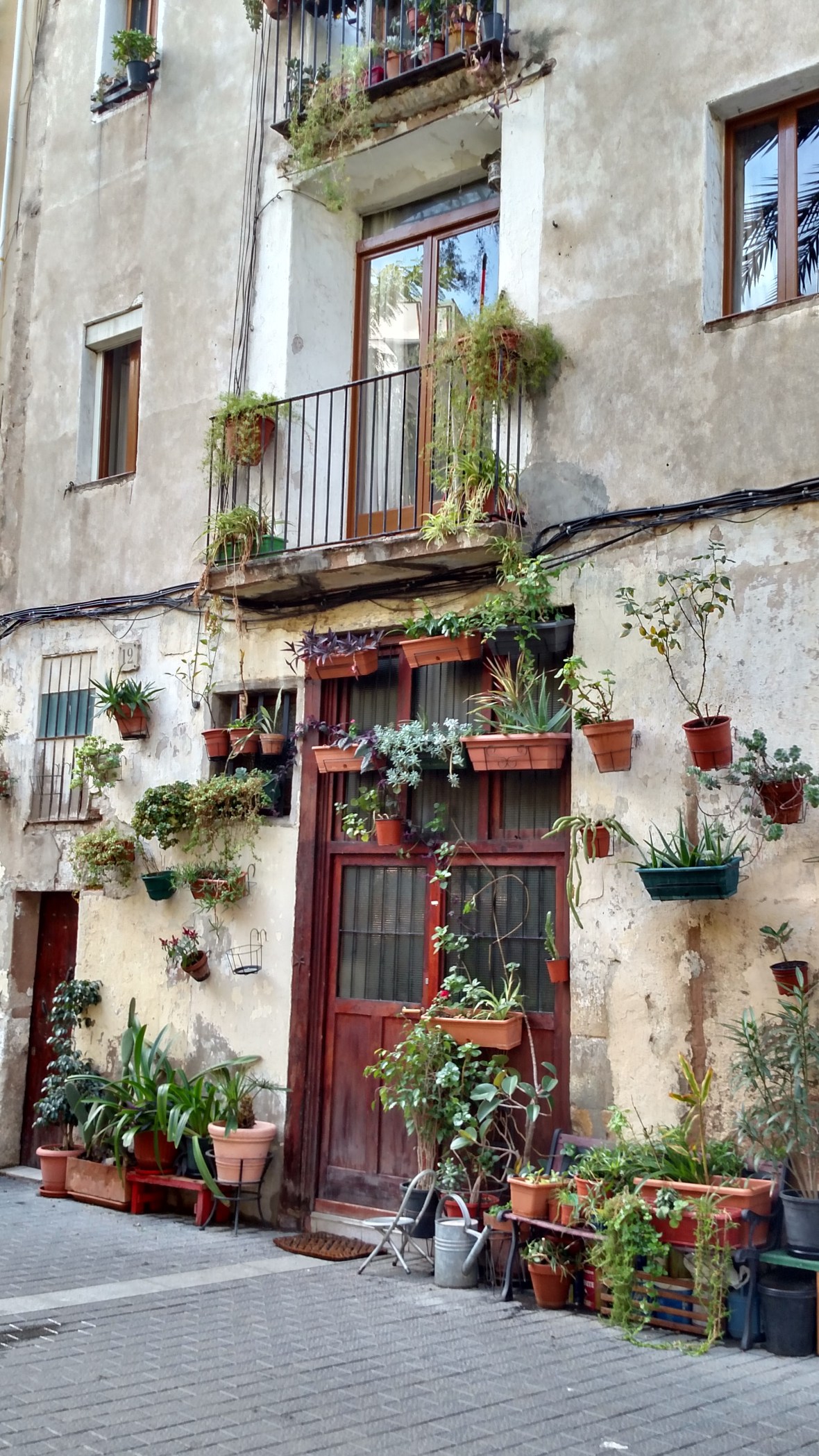
An alleyway in the Barri Gotic
Please take the time to explore the nooks and crannies of the Barri Gòtic (the Gothic Quarter), and while its roots date back to the Romans, it has some fine examples of medieval architecture. We really enjoyed the area which also has a terrific Picasso museum with works from his boyhood years as well as his rose period and blue period, and then stopped at Lonja de Tapas for sangria and tapas. The museum is impressive and well worth going to. We ate light knowing that our dinner was going to be at the famed Roca Moo restaurant.
Roca Moo is at the Hotel Omm (as of this writing, Spain has been hit hard with the terrible coronavirus and so you may not find much information on the menu). As a satellite of their their landmark restaurant, El Cellar de Can Roca in Girona, the Roca brother’s Roca Moo is a slightly lighter version, easier on the wallet (and MUCH easier to get reservations).
I had the “Classics Menu” pairing seven courses with seven wines that harmonize (as the menu said), and it was an evening that did not disappoint. Catalan inspired courses with all the wines coming from Spain (with the exception of a 2008 Riesling), each course was delicious, uniquely presented and well prepared with my two favorites being the suckling pig and the oxtail with prawn ravioli. The service was crisp and attentive, yet friendly. This was our “big” formal dinner while in Barcelona – exceeding our expectations, and I’ve recommended it to many people over the years.


While Roca Moo was a culinary juggernaut, the following day we experienced another type of sensory overload at the Sagrada Familía and the Modernisme style.


In this era, where buildings are constructed in a matter of months or even weeks, it hard to imagine a building that continues to be built more than a century after it started. Antoni Gaudí actually took over construction in 1883 (originally begun in 1882 by Francesc Villar), and his influence and style is evident everywhere. Columns are tree trucks with branches jutting skyward, with flowers sprouting and animals prancing – all made of stone! There is so much life in the sculptures and you could spend a lifetime and still find something new there. The stained glass, mostly with a color theme like orange or blue, is beautiful. It really is an incredible sight that has to be seen in person – pictures just don’t convey the sense of scale. Modernisme, which Gaudí was a big part of, is a Catalan original style and you can see it all over Barcelona – not just the Sagrada.
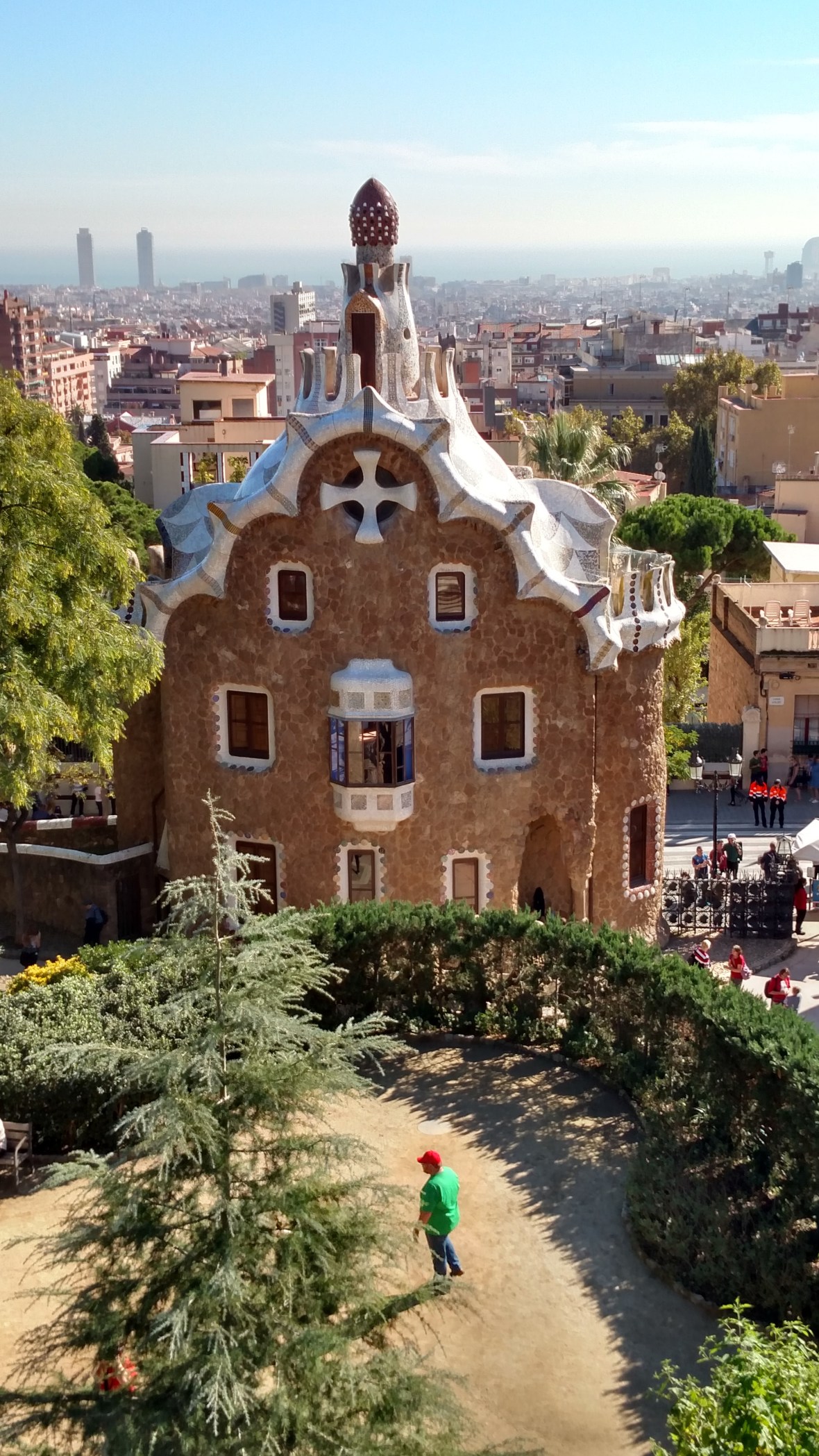
Entrance at Parc Guell
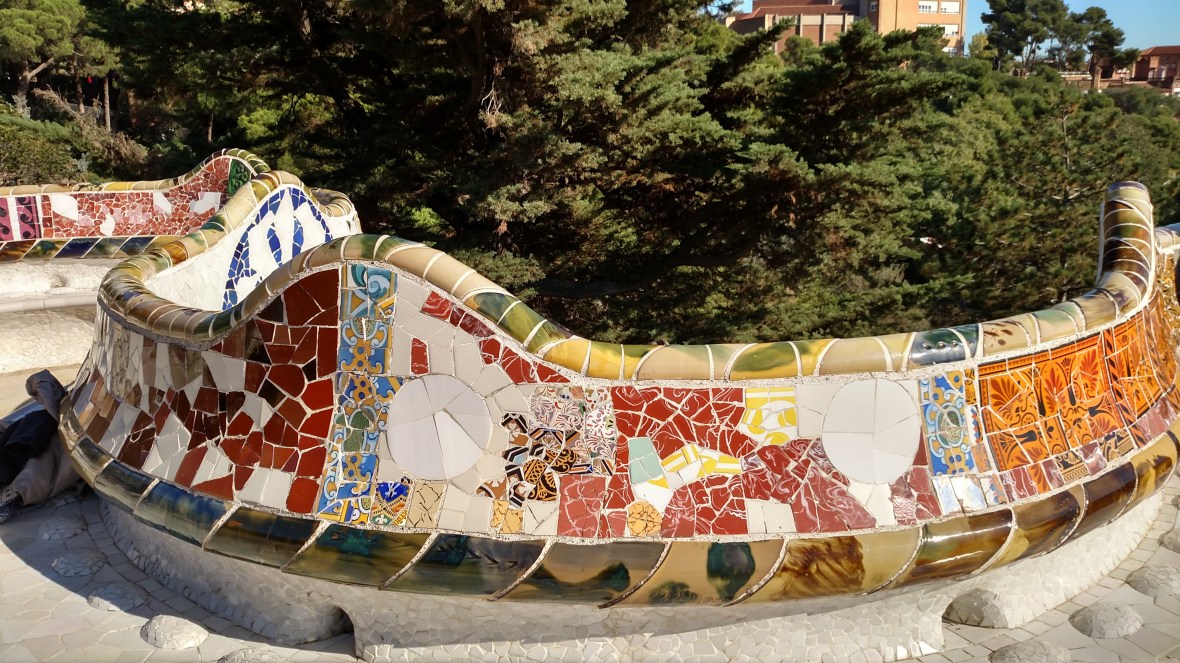
Trencadis tiles at Parc Guell
His Parc Güell is whimsical place to visit and meander around the pathways where you can see tiled animals and benches using the trencadis process where pieces of tiles are put together in mosaic patterns. We really enjoyed the park, but it got very crowded the longer we were there, so get there early (opens at 10am).
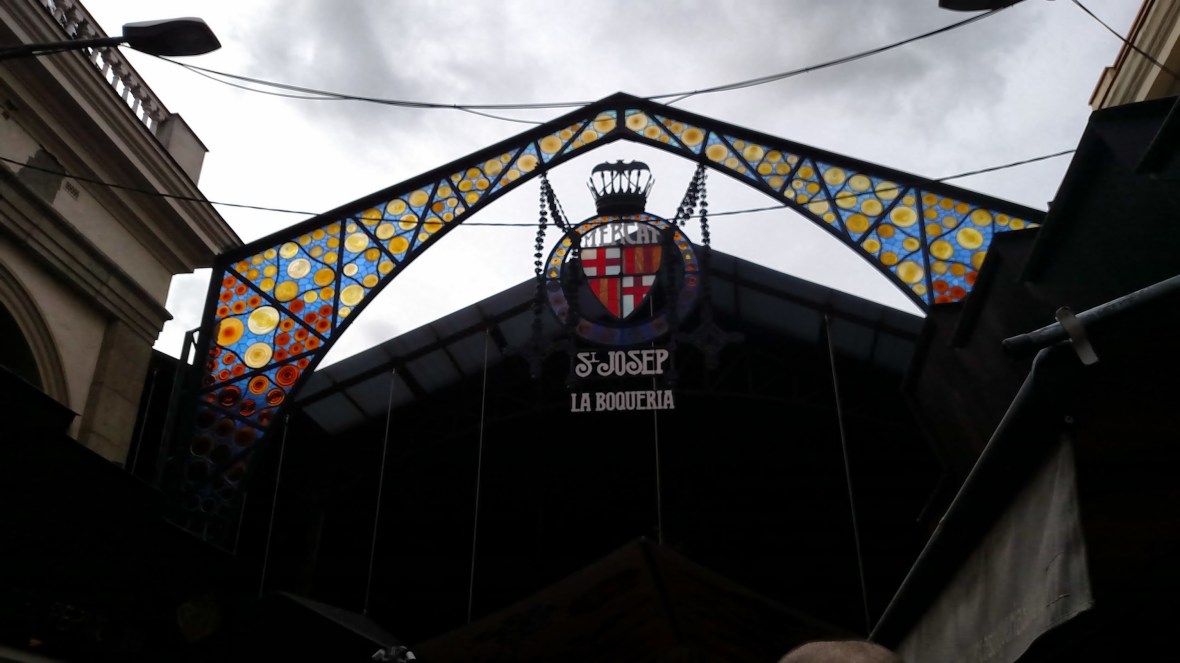
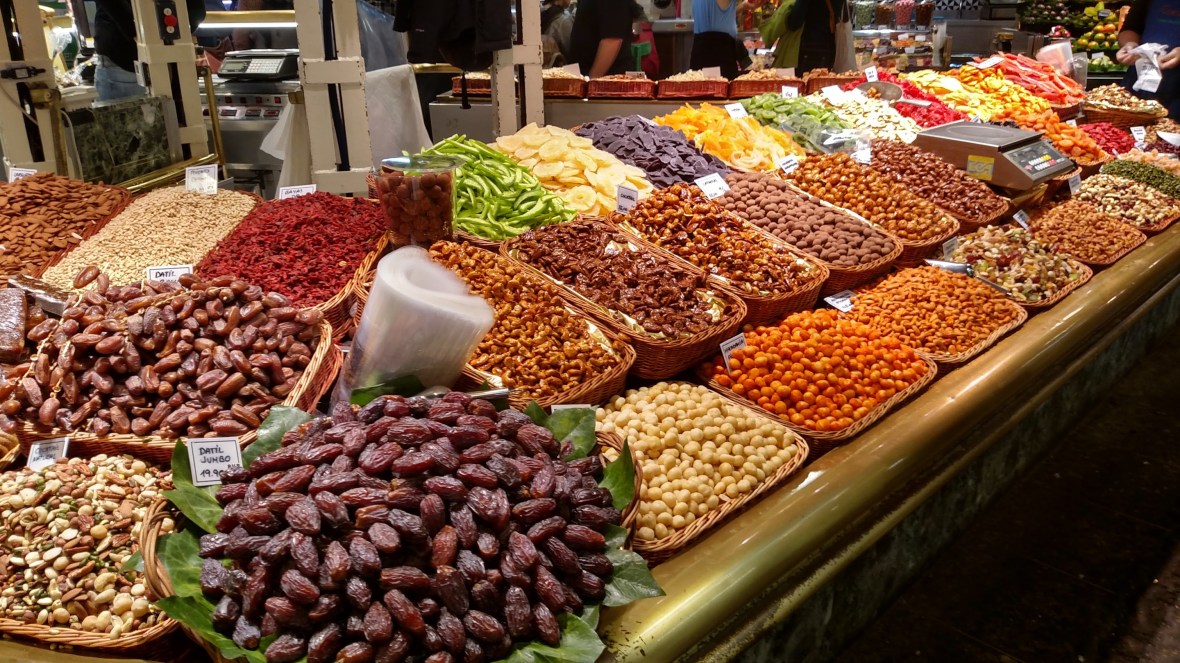
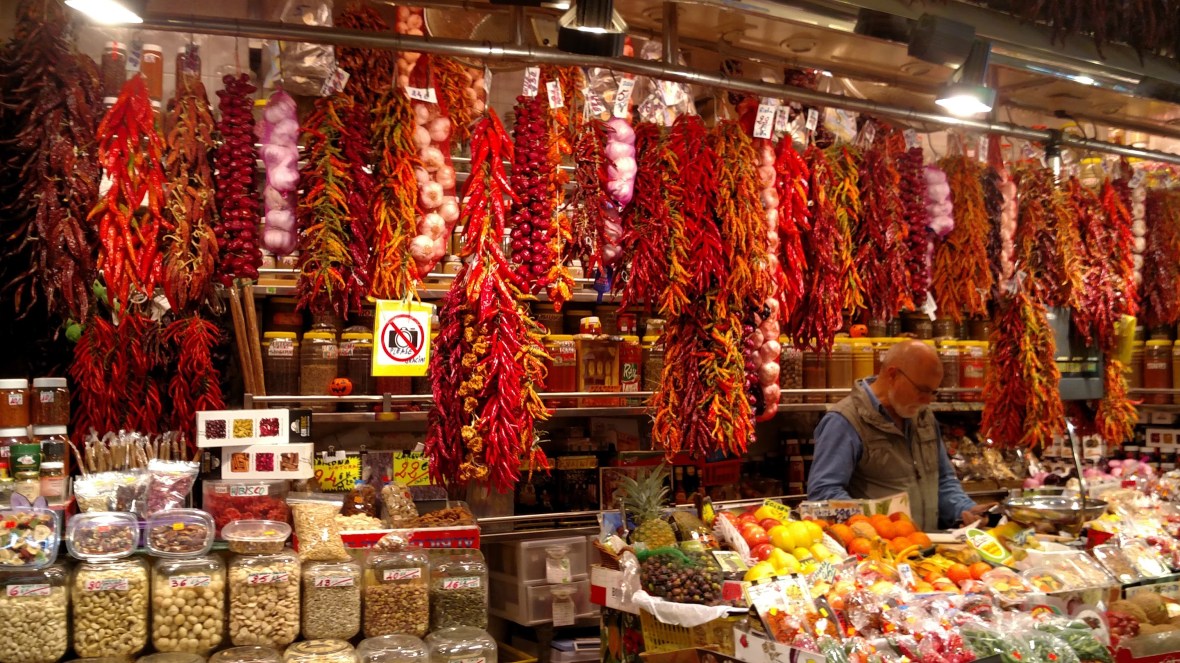
We wandered over to La Rambla for a paseo and while in the area went to the La Boqueria (Mercat de La Boqueria) a covered market with everything from spices, to fresh fruits, to live seafood. It’s a fun place to visit and pick up some items, but you have to stop at Pinotxo, a no-nonsense tapas bar that had super food. We weren’t even hungry but felt compelled to stop. The gambas were so good! The owner (yes from the Rick Steves Barcelona episode) is usually there and he was furiously working at an impressive pace.
If you like food and art, Barcelona is a culinary shrine infused with artistic flair, and well worth spending time there.
 A Travel Mobius